


ENVIRONMENTAL IMPACT MANAGEMENT

We continue to strengthen our efforts to improve energy efficiency and promote the responsible and sustainable use of natural resources. At the same time, the prevention, reduction and mitigation of the environmental impacts associated with our operations remain a cross-cutting priority in our daily management.

In this context, we promote a corporate culture based on environmental responsibility, in which energy efficiency and minimizing impacts on the environment are integrated as key principles in the execution of our activities and when making operational decisions.

1.1 ENERGY EFFICIENCY AND CONSUMPTION OF NATURAL RESOURCES

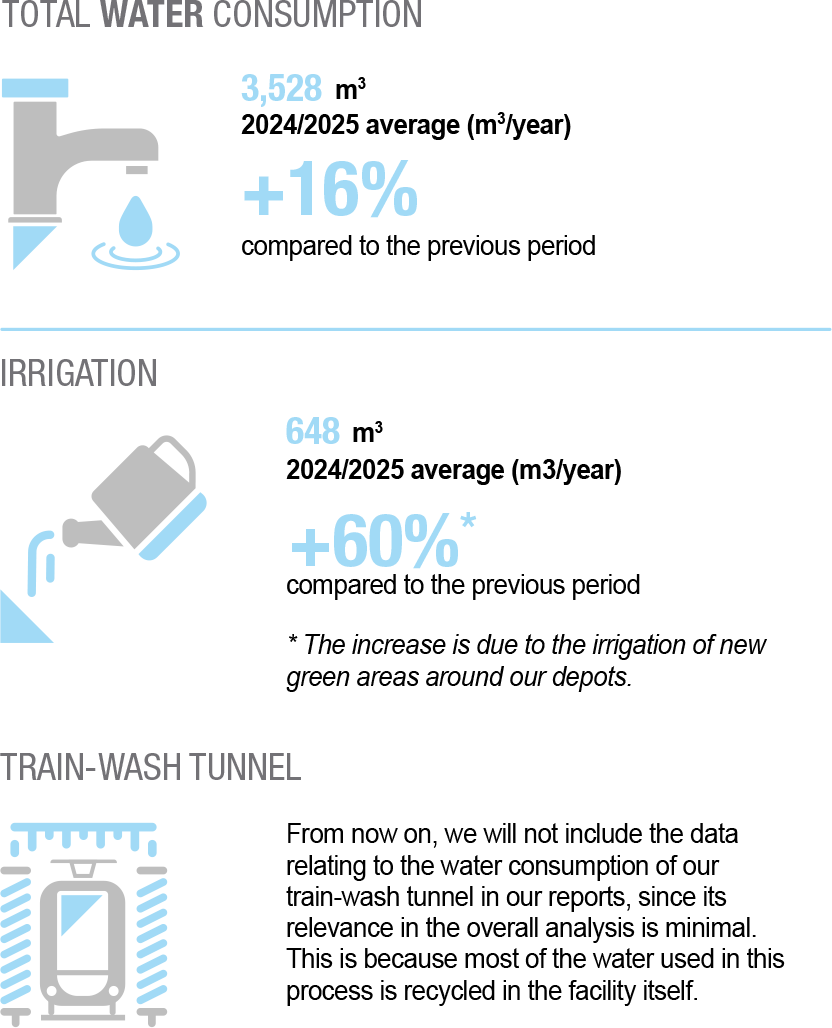
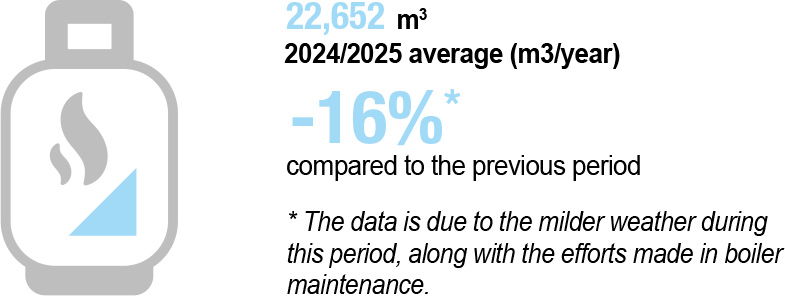
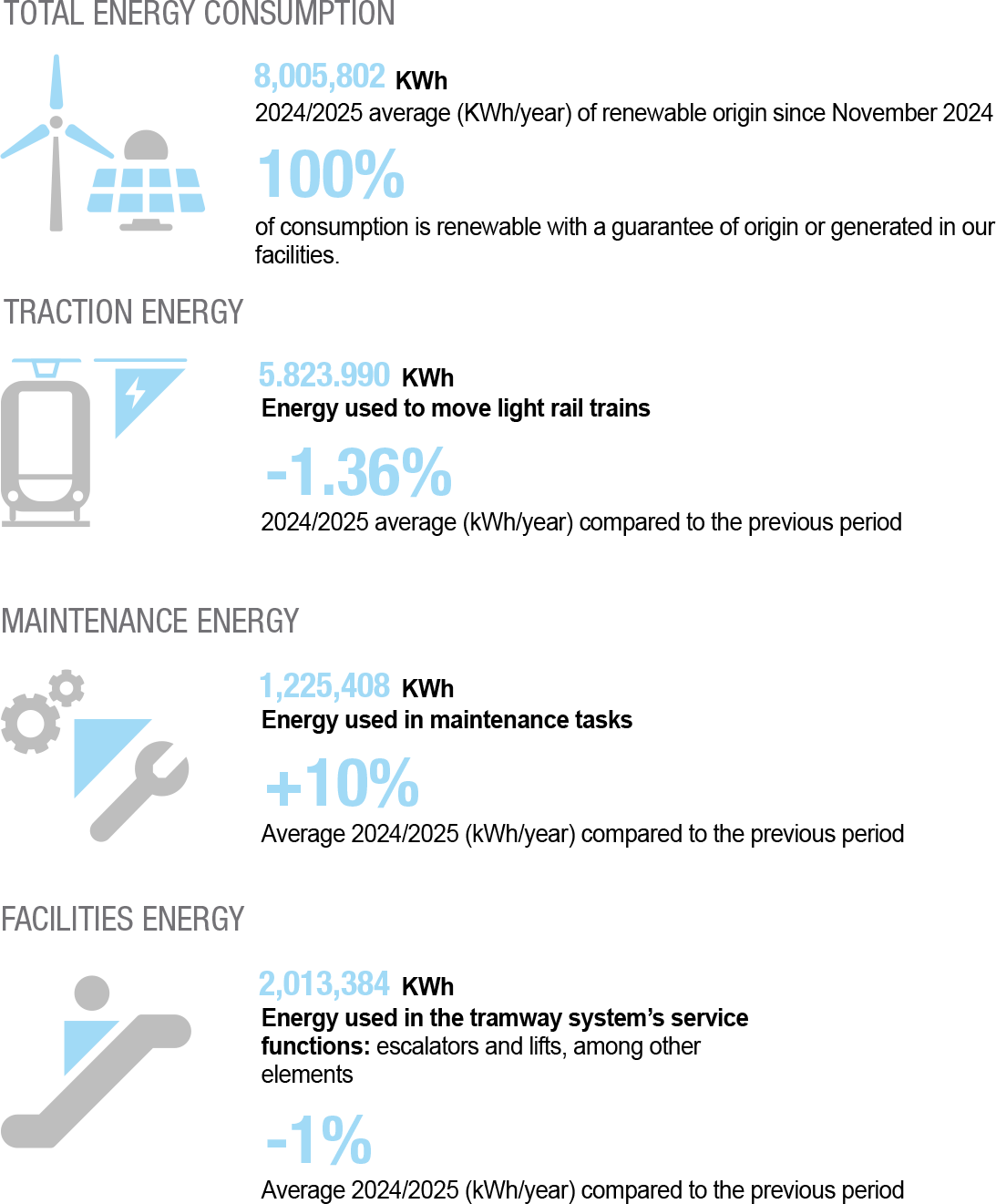
We have reinforced our actions aimed at reducing emissions and improving energy efficiency, focusing on optimizing the consumption of natural resources such as energy, water and gas.

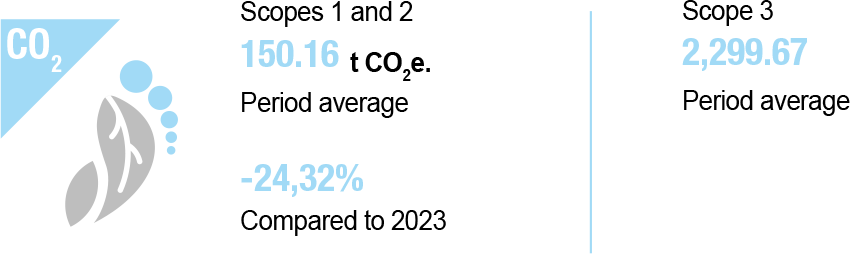
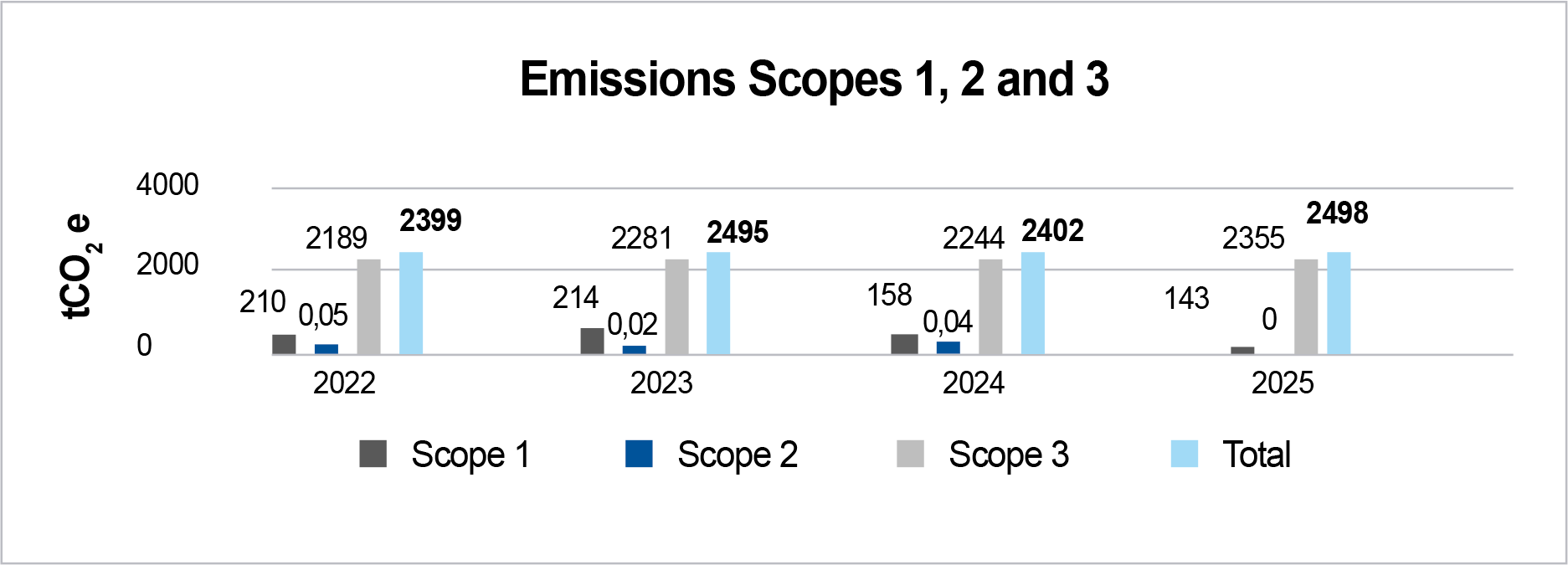
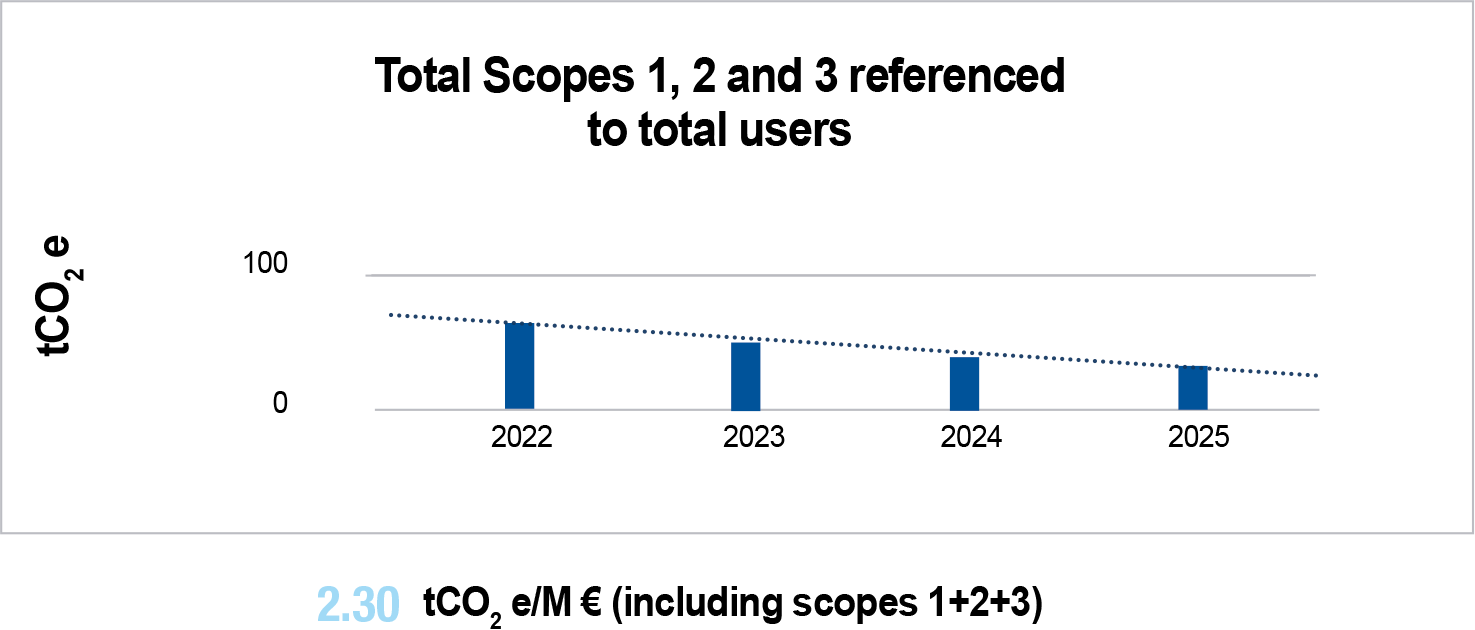
We are also intensifying our efforts to reduce our carbon footprint by incorporating the measurement and management of Scope 3 emissions into our climate strategy in 2025. To this end, we calculated the three scopes of our carbon footprint, and had it checked by an external entity for the period 2022-2025. The results show a reduction in absolute terms of Scopes 1 and 2, as well as a decrease in Scope 3 and the total footprint in terms relative to the total number of MLO users.
WATER CONSUMPTION

MLO is committed to actively contributing to the fight against climate change by defining and implementing a decarbonisation strategy aligned with the principal international frameworks. In this context, our Scope 1 and 2 total emissions reduction target is 42.5% by 2030, taking 2025 as our base year. This objective is aligned with the global commitment to limit the increase in global average temperature to 1.5°C from preindustrial levels, as recommended by the Intergovernmental Panel on Climate Change (IPCC).

In addition, in 2024 the Management Committee analysed the physical and transition risks associated with climate change, as well as the opportunities arising from its short, medium and long-term effects. This analysis was carried out in accordance with the guidelines of the Task Force on Climate-related Financial Disclosures (climate disclosure framework), assessing its impact on our stakeholders, with the aim of implementing the corresponding mitigation measures.

Regarding physical risks, we identify and evaluate the possible impact of weather events on the supply chain; operational, energy and resource costs; as well as the impact on employee health. There is a transition risk analysis done with regard to legal, technological, reputational and operating cost aspects.

The risk assessment is based on the following outline:

CONSUMPTION OF GAS
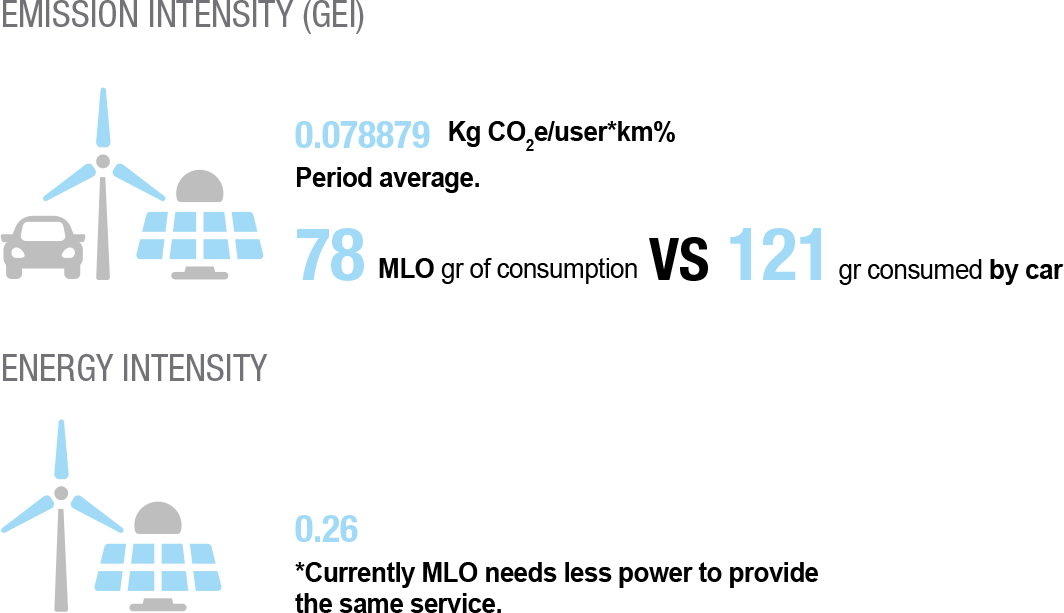
ENERGY EFFICIENCY
SOLAR PANEL ENERGY
CARBON FOOTPRINT

The carbon footprint is a key tool to analyse and manage greenhouse gas (GHG) emissions, making it possible to identify their origin and advance in their reduction. Its calculation corresponds to compliance with Law 7/2021 on Climate Change and Royal Decree 214/2025, and includes the annual report to the Regional Transport Consortium of Madrid (CRTM) using the official MITECO methodology. During the period analysed, the calculation was expanded to incorporate Scope 3, and its external verification was carried out in March 2026.

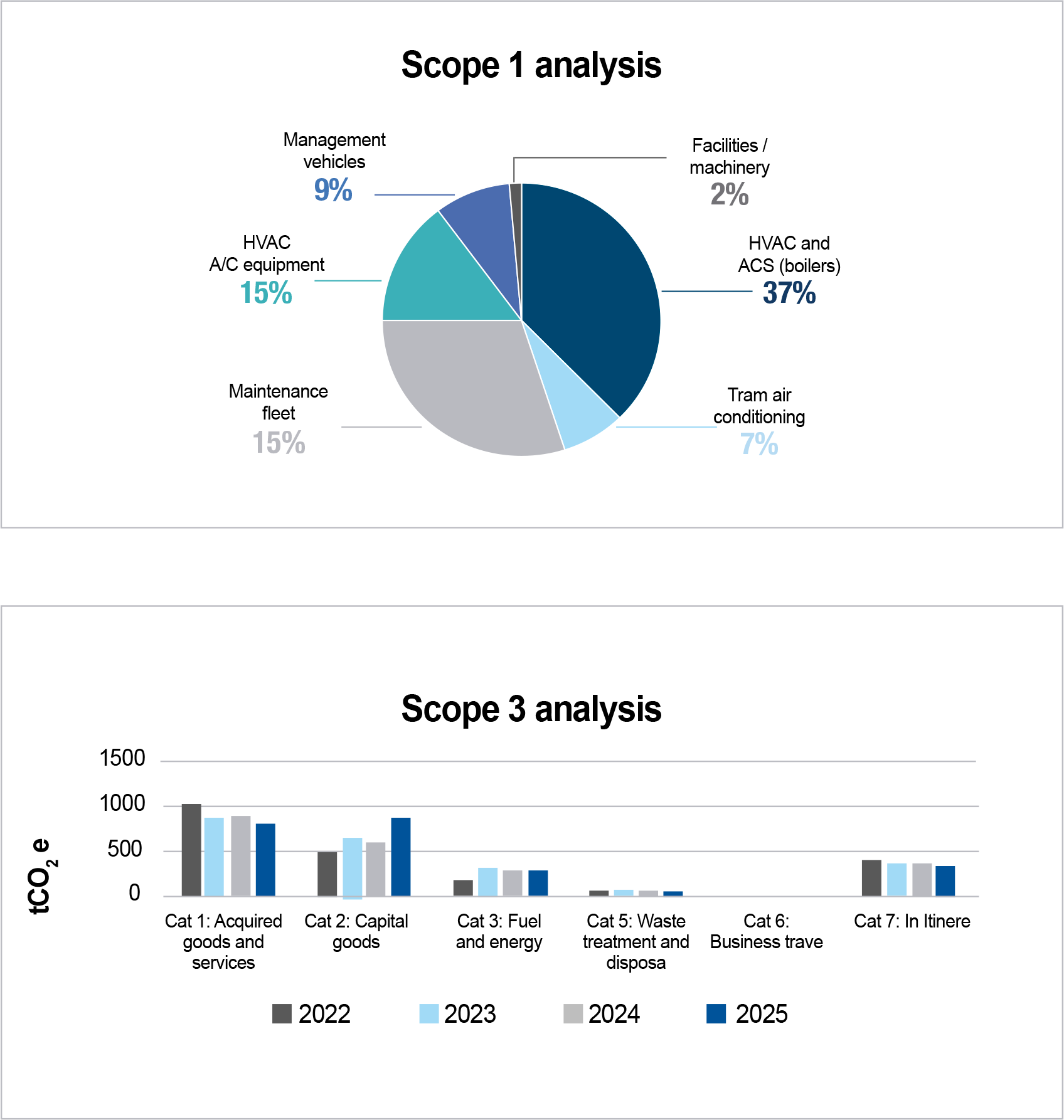
The results show a significant reduction in direct emissions (Scope 1), with an approximate decrease of 32% between 2022 and 2025, driven by improvements in energy efficiency. Indirect emissions (Scope 3) have a variable and slightly upward trend, being concentrated mainly in purchased goods and services, capital goods, energy and employee mobility. The Scope 2 range was 0 tCO2e in 2025.

The positive impact of organisational measures in the reduction of the indirect carbon footprint can be seen, guiding the Scope 3 mitigation strategies toward supply chain management, planning investments with lower carbon footprints and promoting more sustainable working models.

There is also a progressive improvement in the carbon footprint per traveller transported, reflecting increased demand and operational optimization.

GREENHOUSE GAS EMISSION INTENSITY (GEI)
EMISSION INTENSITY (GHG) TCO2e/users
TRAFFIC-FREE CITIES 2024/2025:
EMISSIONS AVOIDED

1.2 IMPACTS ON THE ENVIRONMENT

This section presents the strategic lines aimed at preventing, mitigating and correcting the environmental impacts derived from our activity, reaffirming our commitment to sustainability and community well-being.

We also promote a culture of environmental awareness among our workers, encouraging responsible practices when carrying out our daily activities.

MLO has no locations in the vicinity of or in sensitive areas with regard to biodiversity. However, it applies the principle of precaution, with the adoption of protective measures against well-founded suspicions that certain products or technologies create a serious risk to biodiversity.

We significantly reduce and avoid emissions associated with transport through an efficient electric mobility system that is less dependent on fossil fuels and has a direct positive impact on the environment.

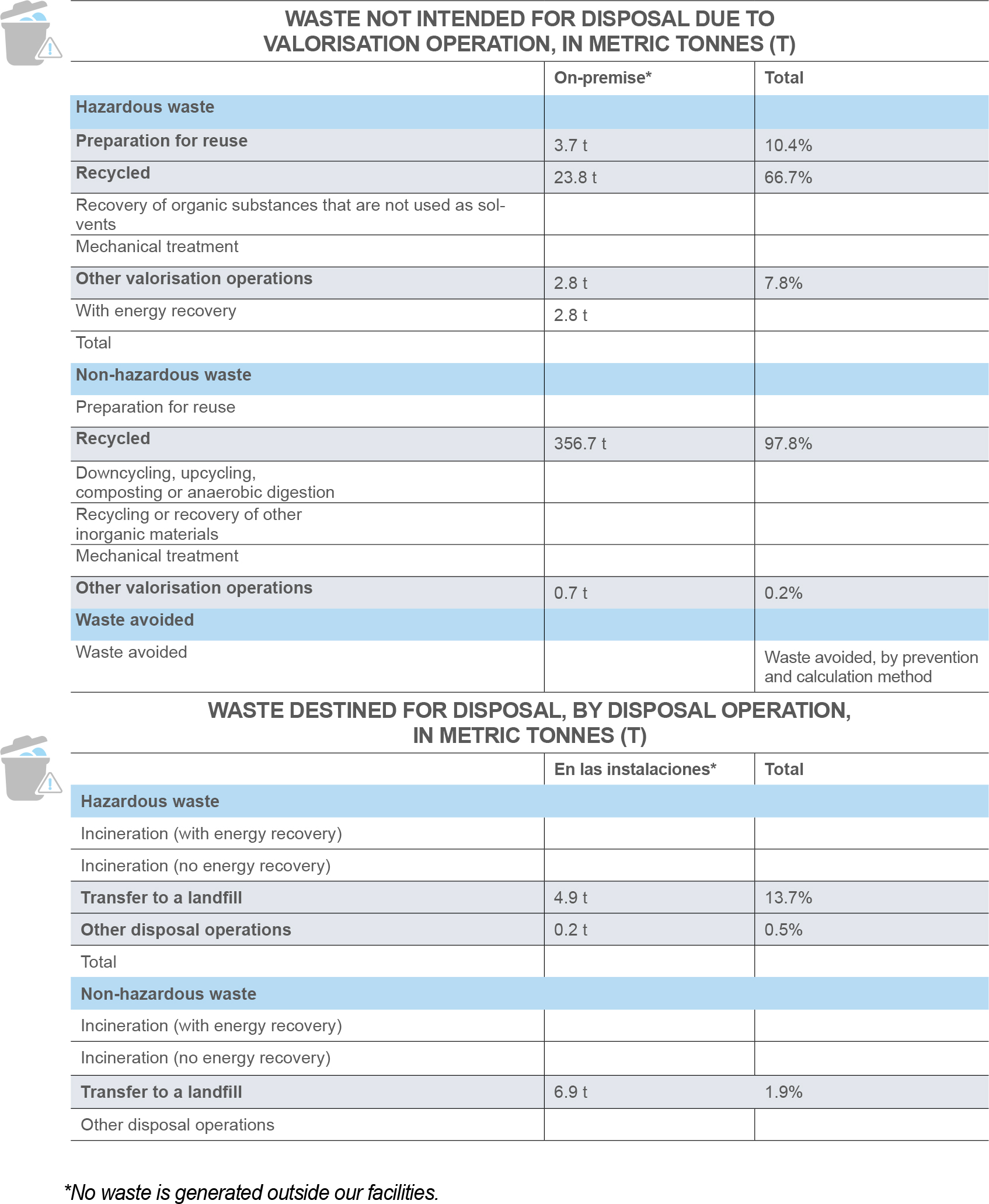
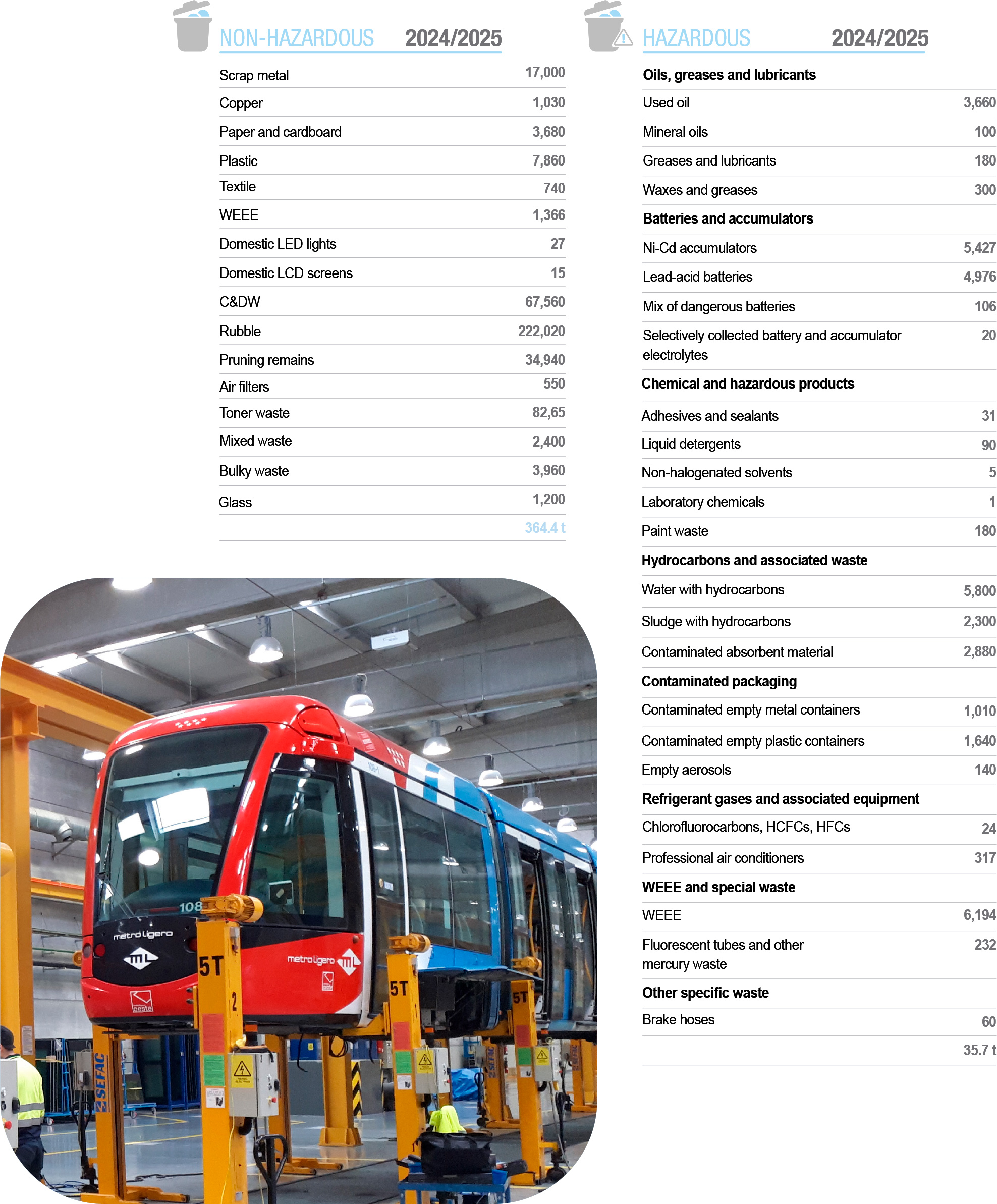
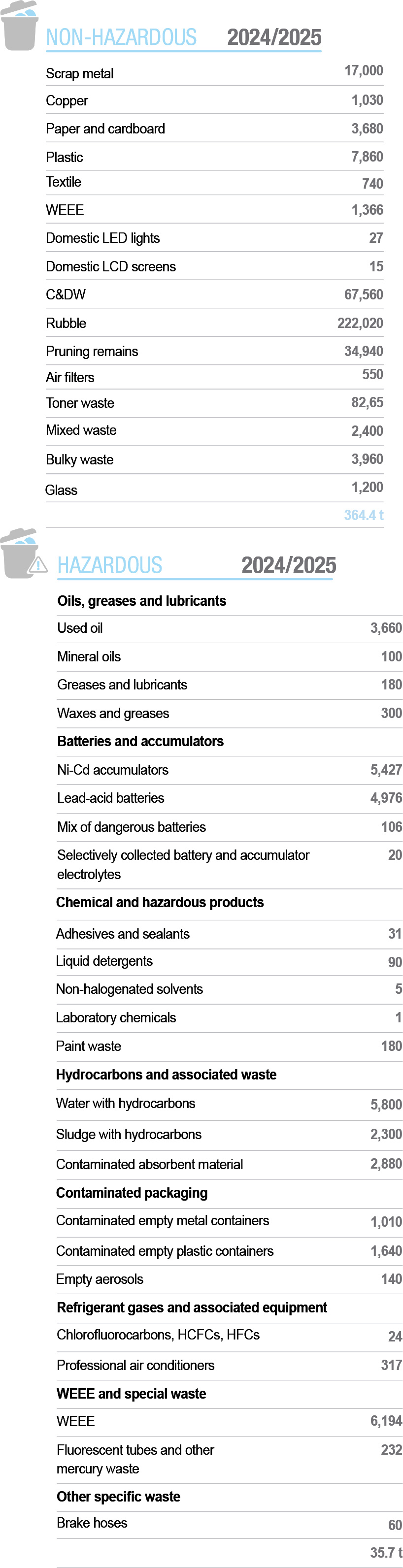
WASTE BY COMPOSITION, IN METRIC TONNES (t)
Waste
composition
Waste
generated
Waste not intended for disposal (recycling, reuse, valorisation) Waste for disposal (landfill, incineration with and without energy recovery)
Hazardous 35.7 t 30.4 t 5 t
Non-hazardous 364.4 t 357.5 t 6.9 t
Total waste 400.1 t 387.9 t 1.9 t
TOTAL VOLUME OF WASTE GENERATED IN KG (HAZARDOUS AND NON-HAZARDOUS), 2024-2025 AVERAGE:
OTHER EMISSIONS (AIR QUALITY)

In terms of carbon monoxide and nitrogen oxides emissions, we make an air quality analysis, measuring the emissions of the heating boiler and ACS, obtaining the following results:

We do not produce emissions of ozone-depleting substances.

Minimizing the impact caused by process water discharges in our facilities is guaranteed by the existence of hydrocarbon decanters and separators in different areas of the facilities. The effectiveness of this equipment is checked periodically by analysing the discharges in the last catch basin.

STRATEGIC ACTIONS AND HIGHLIGHTS 2024/2025
OTHER INITIATIVES