
MLO PROFILE

GOVERNANCE

Metro Ligero Oeste (MLO) operates as a concession holder, responsible for the construction and operation of the light metro lines ML2 and ML3, which connect the municipalities of Boadilla del Monte, Alcorcón and Pozuelo de Alarcón with Madrid. Both lines are part of the public transport network managed and coordinated by the Madrid Regional Transport Consortium (CRTM), along with the Metro, Cercanías suburban rail, and city and intercity bus services.

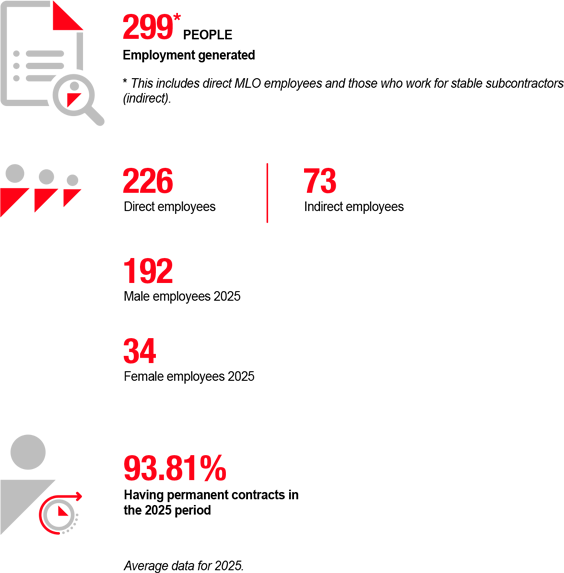
Since July 2007, Metro Ligero Oeste, S.A. has been in charge of the operation and comprehensive maintenance of the light metro system, taking responsibility for both infrastructure and rolling stock. This activity is carried out thanks to a team of 226 professionals, based in Ciudad de la Imagen, in the municipality of Pozuelo de Alarcón (Madrid).

The development of this project involved an initial investment of close to 673 million euros, for the execution of works; the acquisition of rolling stock; and the provision of the facilities, technical equipment and human resources necessary for its implementation.

MLO expressly declares that it does not engage in any activities related to “controversial weapons; it does not engage in tobacco growing or production; does not earn income from the exploration, mining, extraction, production, processing, storage, refining or distribution of fossil fuels (coal, oil or gas), including the transport, storage and trading of such fuels. And it is not a manufacturer of pesticides or other agrochemicals.” Furthermore, the company confirms that it is not excluded from any EU Paris Agreement-aligned benchmark, as provided for in the Commission Delegated Regulation (EU) 2020/1818 of 17 July 2020.

* Data as of 31 December 2025.

COLLECTIVE AGREEMENTS AT MLO

At Metro Ligero Oeste we defend our workers’ right to collective bargaining and maintain a commitment to sustainable human management that is reflected in the collective agreements signed over the years, from the “Company Agreement” signed in 2009 to Collective Agreement III.

PASSENGERS TRANSPORTED

In the previous report, we remarked on the progressive recovery of demand and the changes in mobility habits thanks in large part to teleworking. During the 2024/2025 period this trend was consolidated, reaching 13,115,675 passengers, 19% more than in the previous cycle. In 2024, there were 6,391,702 passengers, and the figure rose to 6,723,973 in 2025.

Breaking down use by days, working days reached a monthly average of 480,604 passengers (+20%), Saturdays rose to 34,601 (+13%) and the figure on holidays was 31,281 (+17%). Together, the data confirm that MLO use underwent sustained growth and consolidation throughout the period.

GOVERNANCE MODEL

Currently, the company has the shareholder backing of three strong business groups that are benchmarks in their respective sectors, recognised for their experience and solvency in their fields.

Our governance structure is responsible for decision-making and the oversight of social, environmental and governance impact management, and is governed by the General Shareholders’ Meeting and the Board of Directors.

The General Shareholders Meeting (GSM), convened annually, consists of the Chairman of the Board of Directors, representatives of the five duly accredited shareholders (two companies and three infrastructure funds), the Secretary of the Board, the Managing Director and guests. Its main functions include the approval of the annual accounts; the application of results and social management; bylaw modification; the increase or reduction of share capital; and the resolution of any matters that are its responsibility under the law or bylaws.

The Board of Directors (BOD), which meets quarterly, is made up of seven non-executive proprietary members representing the shareholders, who participate fully in decision-making; and two members appointed by the grantor authority (Directorate General of Infrastructure and CRTM), who have a voice but no vote. In addition, they are supported by a Secretary of the Board of Directors, who is from a prestigious law firm. The BOD is the body responsible for representing, managing and controlling the company, adopting the agreements and actions necessary for the proper execution of its corporate purpose, in accordance with the regulations and bylaws in force.

The average seniority of our 7 Directors (6 men and 1 woman) is approximately five years.

Representation at the executive level rests with our Managing Director, who is responsible for implementing the Board of Directors’ strategies.

We are reinforcing a governance model that guides decisionmaking and ensures management control, aligning the company’s performance with its economic, social and operational responsibilities, allowing us to anticipate risks, improve performance and build trust.

APPOINTMENT AND SELECTION OF THE TOP MANAGEMENT BODY

Our Board of Directors is governed by the legal regulations established in our bylaws and in the partner agreement determined by the shareholders, which includes questions such as appointments.

It is important to note that our Board of Directors has the responsibility of directing and supervising the company’s corporate policies, although it delegates their management to our Management Committee.

In the area of compliance, the Board has appointed our current Administration Director as Compliance Director.

CHAIRPERSON OF THE TOP MANAGEMENT BODY

Our process for selecting the Chairperson of the Board of Directors follows the proposal and adopts the choice of the majority shareholder, which appoints one of its directors to this position.

The current Chairman of the Board is the representative of the largest shareholder, (Aberdeen Investments) and does not exercise executive functions in the organisation.

ROLE OF THE TOP MANAGEMENT BODY IN OVERSEEING IMPACT MANAGEMENT

The Board of Directors actively oversees the management of impacts related to good governance and includes sustainability as a recurring point in its agenda. On a quarterly basis, it analyses the strategic sustainability plan and the main performance indicators to evaluate its evolution.

In addition, it receives monthly reports with key information on financial performance, the maintenance of major systems, user demand, the accident rate, complaints, fraud tracking and indicators linked to the contract with the public administration.

This continuous monitoring makes it possible to evaluate the degree of compliance with the established objectives and to make decisions aimed at on-going improvement.

In short, the Board puts sustainability at the heart of its decision-making, exercising active supervision that reinforces its integration into the company’s management and strategy.

ROLE OF THE TOP MANAGEMENT BODY IN PRESENTING SUSTAINABILITY REPORTS

The responsibility for making a context analysis for the organisation, gathering information and drafting the Sustainability Report lies with General Management and its Management Committee. The Board of Directors is responsible for reviewing and approving the draft report submitted.

CONFLICTS OF INTEREST

Our Board is committed to always protecting the interests of everyone involved in operations, implementing suitable procedures and measures to identify and resolve any conflicts of interest that may arise.

The members of our Board of Directors and our employees must exclusively prioritize the company’s interests, avoiding any personal activity that might generate conflicts of interest. Should such situations arise, a channel is provided to report them to the Legal Requirement Compliance Management, which is responsible for quickly detecting them and actively participating in their resolution.

COMMUNICATION OF CRITICAL CONCERNS

Any relevant matter that may involve reputational risks, penalties, legislative or operational changes, among others, is immediately referred by the Managing Director to the Board of Directors.

In addition, our general monthly reports include the list of interest group complaints for the relevant period.

KNOWLEDGE AND EVALUATION OF THE TOP MANAGEMENT BODY’S PERFORMANCE

The responsibility for evaluating the training and performance of the highest management body lies with the majority shareholder.

REMUNERATION POLICIES

During 2025 and 2024, the members of the Board of Directors did not earn or collect any amount for any reason. Likewise, the company did not grant advances or credits, nor did it assume any obligation with regard to pensions and life insurance involving any member of the Board of Directors.

Since 2025, the Company has considered Management Committee members as Senior Management, as they participate in strategic decision-making and in running and managing the company. The aggregate remuneration that Senior Management members received during financial year 2025, including the comparative information for 2024, is as follows:

Senior Management member remuneration 2025 2024
Fixed remuneration 902,171 874,858
Other remuneration 91,597 74,401
Social security and life insurancea 159,485 150,276
COMPANY MANAGEMENT 2024/2025
DELEGATION OF RESPONSIBILITY
FOR IMPACT MANAGEMENT

The Board of Directors delegates executive responsibility for managing our impacts on the economy, environment and people to the Managing Director. The Managing Director relies on the directors of the different areas, who are part of the Management Committee, to develop strategies in these areas. The Management Committee consists of 5 men and 2 women.

INTERNAL STRUCTURE OF MLO

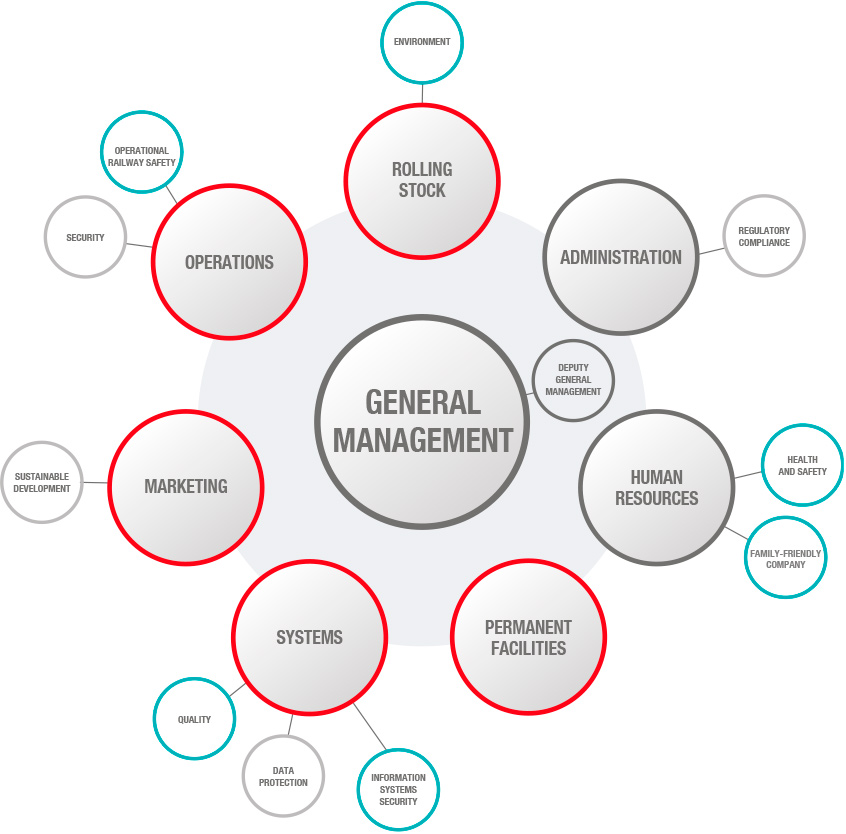
Our functioning is supported by various committees that constitute our management bodies. These committees are coordinated by the General Management, and their structure and functioning are detailed below.

DESCRIPTION OF COMMITTEES

MLO’s management is based on a series of committees that make up its management bodies, coordinated by the General Management.

The Strategy and Corporate Organization Committee (CEOC) approved the reorganization of the committees in November 2025 in order to enhance their efficiency and agility.

Strategy and Corporate Organisation Committee (CEOC) The CEOC meets quarterly and consists of the Managing Director and the area directors. It oversees the implementation of agreements, budget performance and the adoption of relevant decisions. Based on the periodic analysis of indicators and incidents, it addresses issues of human resources, internal regime, occupational risk prevention, and ethics and compliance. It also monitors strategic actions, significant investments and working groups, defines safety guidelines, approves significant changes and monitors compliance with the Annual Security Plan and its associated indicators.
Internal Procedures Committee (CRI) The CRI meets at the request of the management concerned and makes an analysis and decision about the penalization procedure (penalties). It consists of the General Management, the Director of Human Resources and the management areas concerned.
Project and Investment Oversight Committee (CSPeI)

The CSPeI meets quarterly and is made up of the Managing Director, the managers of other areas and heads of strategic projects, depending on the occasion. It supervises projects chosen for their relevance, impact or investment volume, paying special attention to those that are sensitive or have significant changes.

Likewise, when the Technical Committee for Change Management escalates a proposal, it approves relevant amendments and designates project managers, strengthening control, assignment of ownership and the proper execution of strategic initiatives.

Integrated Management Committee (CGI) With quarterly meetings, the CGI consists of General Management, area directors, Integrated Management System (IMS) technicians, the safety manager and the ENS security manager. It monitors operational indicators, user complaints and suggestions, risk and change management, incidents and accidents, supplier performance, audits and significant environmental aspects. Moreover, it evaluates service conformity, asset status, participation and consultation, and perceived quality by users. It approves the Annual Review Report for management and ensures compliance with the Annual Safety Plan, guaranteeing comprehensive monitoring of performance, safety and sustainability.
Occupational Health and Safety Committee (CSS) The CSS meets quarterly and has balanced representation. It is made up of Occupational Risk Prevention specialists (PRL), three company representatives and three risk prevention delegates. It is responsible for identifying and evaluating occupational risks; defining prevention criteria and procedures; and developing, implementing and reviewing health and safety plans and programs. It monitors worker training and information, promotes improvements in working conditions and proposes corrections for identified shortcomings. In addition, it manages health monitoring programs, respecting employee privacy, and evaluates new projects and technologies from a risk prevention perspective.
CoordinBusiness Activity Coordination (CAE) The CAE is convened upon request and includes the person responsible for PRL and the contractors. Its main job is to analyse the security measures adopted and compliance with them, identify and propose new measures needed, and review the CAE platform, thus ensuring preventive management and safety in the interaction between the company and its contractors.
Operations Area Management Unit (UGZO) With weekly meetings, the UGZO is made up of coordinators and representatives from maintenance, operations, PRL staff, environment and marketing. It is responsible for planning work and activities, defining the associated safety measures, communicating operational failures or breaches, and making preliminary incident analyses, ensuring inter-area coordination, risk prevention and correct operational management in the area.
Technical Committee for Change Management (CTGC) This committee meets as needed within the UGZO sessions, integrating interested and affected areas, together with the safety manager. It makes a detailed analysis of proposed modifications, reviews the associated risks and their impact on existing ones using Hazard Log analysis, which determines technical solutions, establishes validation and acceptance criteria and plans the implementation and commissioning, ensuring that changes are managed in a safe and coordinated way.
Works council There are 9 members, elected by the workers. It meets at the request of the parties.
Drug Dependence Oversight Committee (CDRG) It meets at the request of the compliance officer and analyses and makes decisions based on compliance with the law. It is made up of the compliance officer and the management of the areas involved.
Accident Investigation Committee (CIA) Meets upon request. It identifies accident causes and the circumstances under which they occurred, in order to prevent them in the future, determining the actions to be carried out. It is made up of the safety manager and the managers of the areas involved.
Crisis Committee (CC) The CC is convened upon request, to manage serious situations. It evaluates incidents and assigns their level of importance, to activate the corresponding protocol. Made up of General Management, the managers of the affected areas and, at times, expert advisors. Each meeting produces minutes including the date, attendees, decisions and pending tasks, published in an accessible portal for comments, without the need for a physical signature. Issues that alter dynamics are dealt with in separate meetings, but they are included in the main minutes, ensuring traceability and coordination in crisis management.
Information Systems Security Committee (CSSI) This committee is part of the Integrated Management Committee (CGI) and holds bimonthly meetings, supervises indicators, audits, actions and minor National Security Scheme (ENS) incidents. It can convene independently in crisis situations. It is responsible for ensuring the security of MLO information, creating, approving and reviewing policies and procedures, assessing risks, defining priorities and assigning ownership. It provides resources, monitors significant incidents and reports to the General Management through security indicators, ensuring follow-up on improvement actions and comprehensive information systems protection.
,