
2024/2025
SUSTAINABILITY IN ACTION

In the 2024/2025 period we consolidated our commitment to
responsible and sustainable service management, integrating
accumulated learning to promote new strategic actions within
the framework of the Strategic Sustainability Plan.
This plan is put together in accordance with ESG
(Environmental, Social and Governance) criteria, with the
aim of strengthening our capacity to adapt to a dynamic
and uncertain environment. To monitor its implementation, a
scorecard was designed with key sustainability indicators that
make it possible to evaluate performance, track results and
prioritize actions aimed at meeting the established objectives.

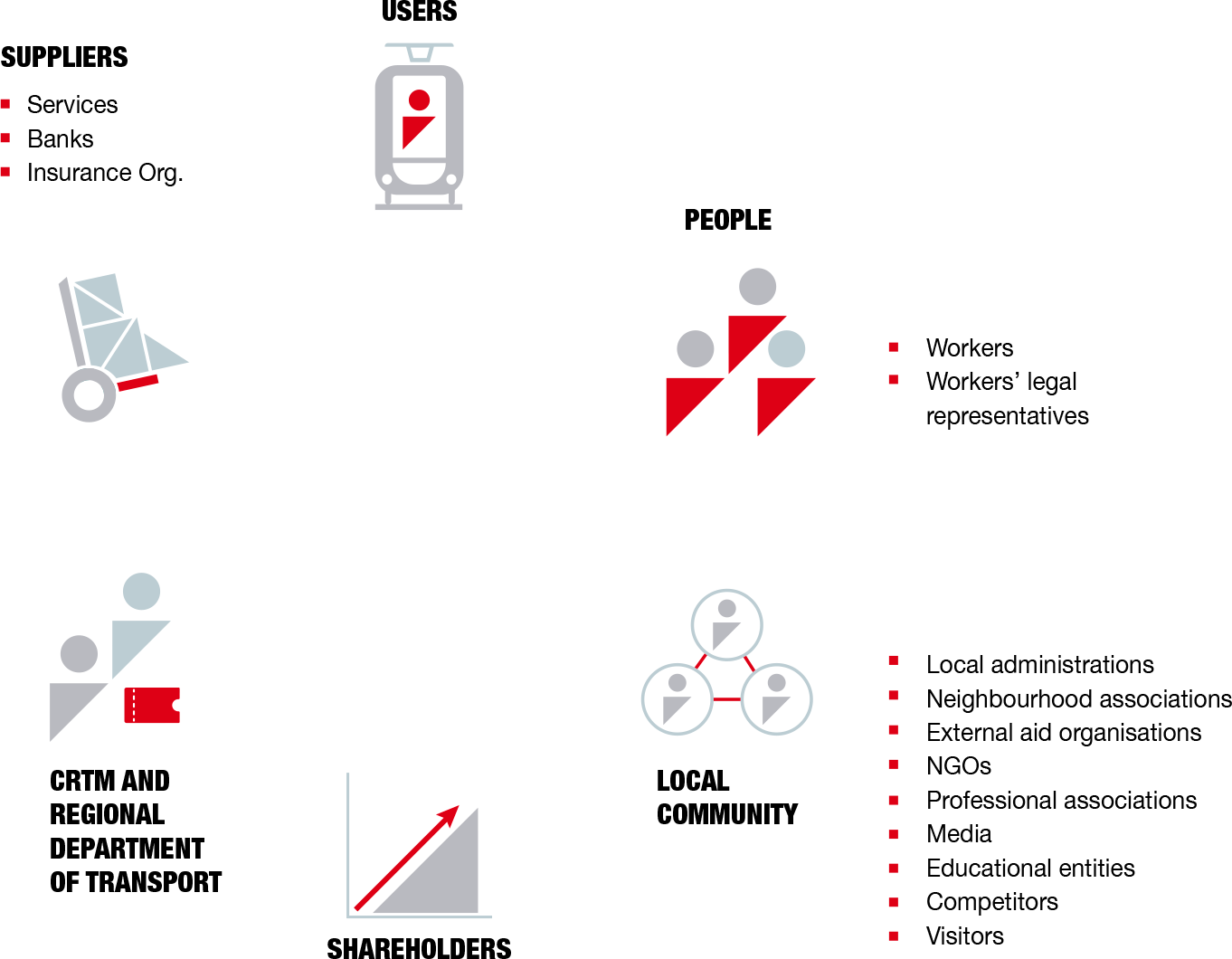
As part of the annual sustainability management review and continuous improvement process, a new relevance survey was conducted in June
2025, using the MLO Portal to reach stakeholders. In a relevant methodological advance, a subgroup analysis was incorporated for the first time
that made it possible to obtain a more detailed and segmented view of each group’s perceptions and priorities.
The methodology applied was based on the systematic evaluation of two key management variables: the level of interest (the organisation’s degree
of relevance for each stakeholder group) and the level of impact (extent to which our activities generate effects on those groups). The results
obtained have provided us with a solid information base to identify significant changes, new expectations and possible adjustments with respect to
2024.
These results have been integrated into the Management System, which has made it possible to update the digitised stakeholder relations map
on the MLO Portal, review and strengthen communication channels, and adjust action planning to meet stakeholder needs and expectations. This
process contributes to strengthening evidence-based decision-making and consolidating sustainability management aligned with the principles of
dialogue, transparency and continuous improvement.
The organisation carries out a systematic review of its relevant issues through context analysis and the monitoring of goals aligned with
stakeholder expectations, under a continuous improvement approach. This review was analysed in depth in the CEOC Committee meeting held
on 24 November 2025, where no significant changes in the Metro Ligero Oeste context were identified.
The context matrix and its updates are published on the MLO Portal, available to the entire workforce, and are maintained as dynamic
information subject to permanent revision.
This process also incorporates the risk analysis of our value chain and studies by the leading sector analysts.
The analysis results did not indicate any need to modify or refocus material issues.
ESG criteria go beyond the traditional approach to sustainability and are integrated as a strategic axis to generate long-term value, strengthen
investor confidence, reinforce corporate reputation and minimize the activity’s impacts.
In this context, Metro Ligero Oeste adopts a proactive approach in defining pillars, lines of action and ESG commitments, which are brought
together in a Strategic Sustainability Plan that acts as a reference framework and systematization tool. This plan guides and coordinates the
actions needed to advance consistently toward the objectives set and is structured in four pillars of action:
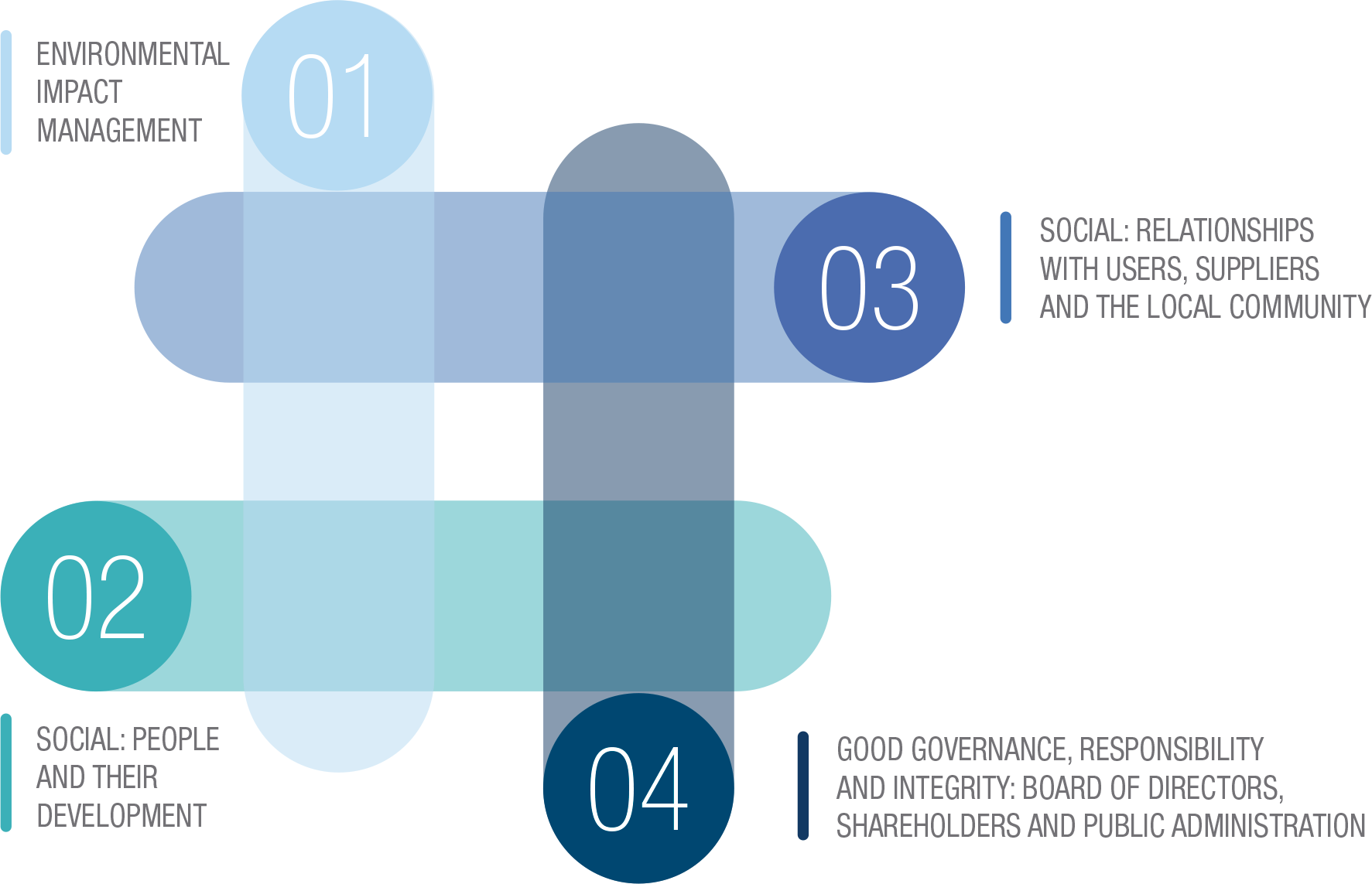
With this structure, we have organised the report in such
a way that each pillar is examined in a specific chapter,
grouping them according to the three ESG sustainability
areas. The full list of relevant topics is now available in
the report index for ease of reference.
The responsibility for implementation and for attaining
the objectives outlined in this plan lies with our General
Management and our Management Committee,
responsible for driving and supervising the actions by
means of the teams in their respective areas.
Likewise, we provide the information and resources
necessary to ensure that our teams are properly trained
and aligned with the ethical and sustainability principles
established in this plan.
The methodology applied is explained below, in addition
to a brief explanation of each of its elements:


The “E” for “Environmental” encompasses the effect that companies’ activity has on the environment, directly or indirectly, and the rational use of natural resources (e.g. carbon footprint, water use, waste management, etc.)

The “S” for “Social” includes the impact on their social environment, community, customers or employees (e.g. diversity and equal opportunities, working conditions, safety and health, data protection, etc.)

The “G” for “Governance” refers to a company’s corporate governance (e.g. transparency policies in its public information or its codes of conduct and anti-corruption programs, etc.)

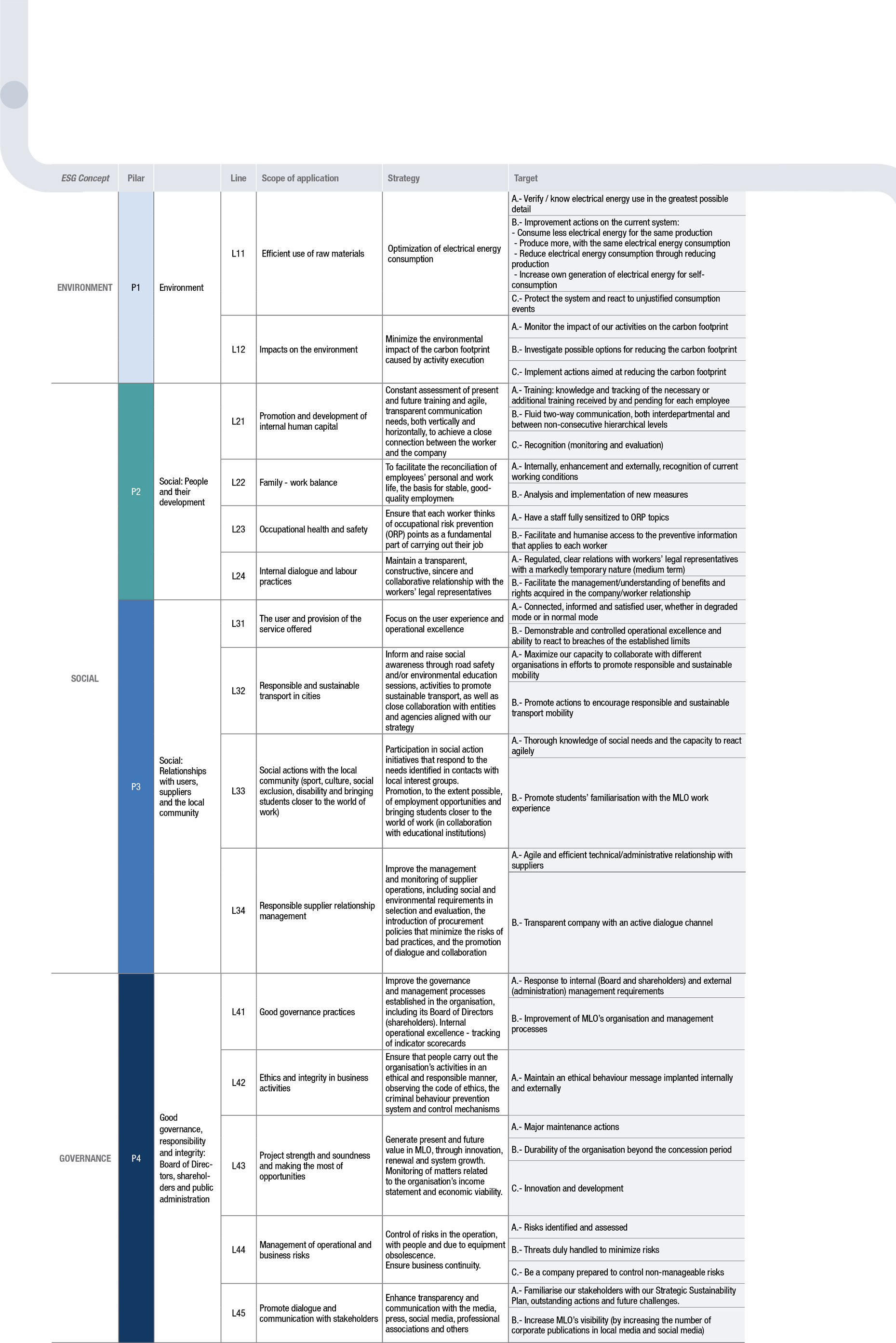
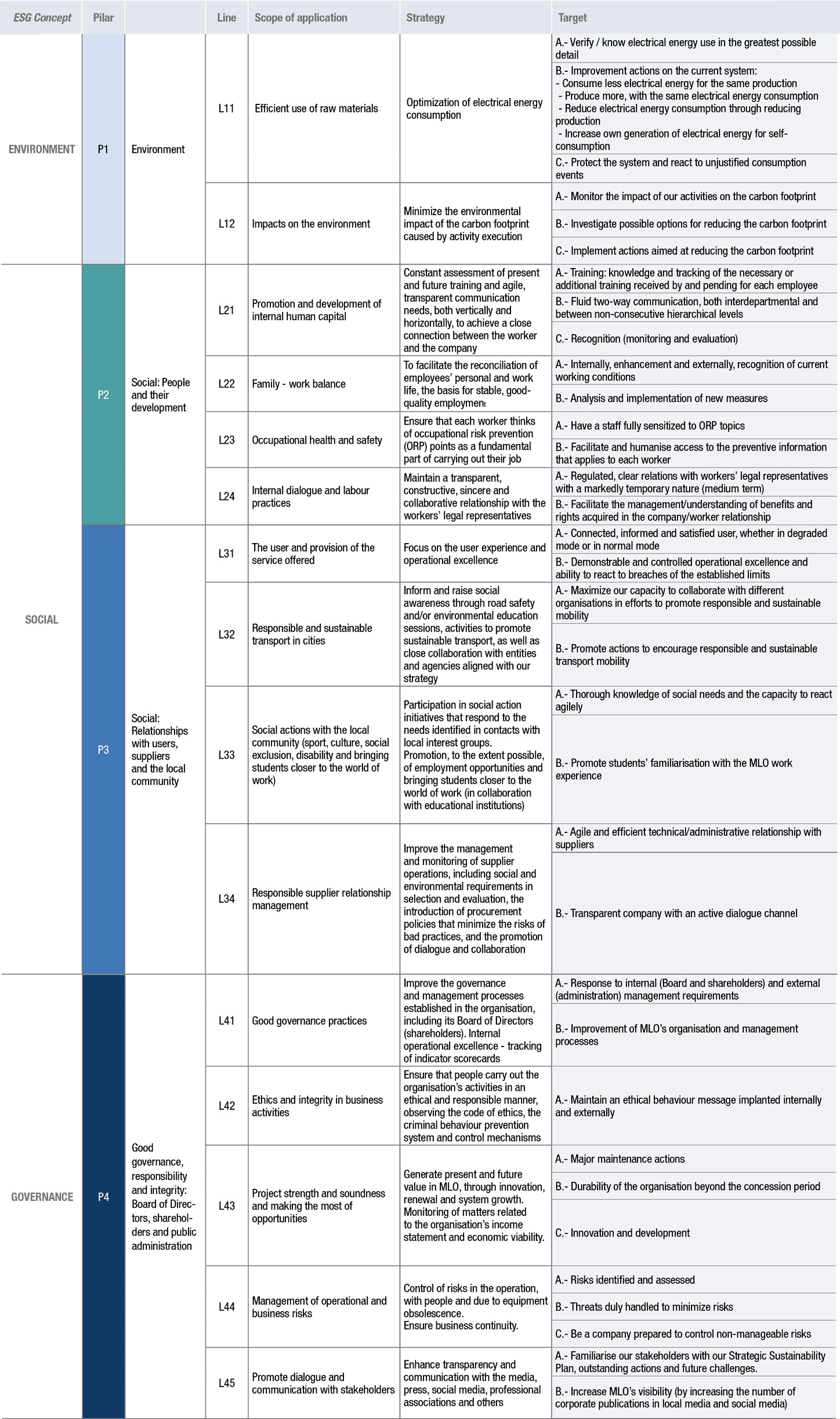
The details of the specific practices, policies and initiatives envisaged to achieve each of the objectives established are set out in the different report sections that explain the above pillars in greater detail.